TRUMP IS UNFIT FOR OFFICE BECAUSE HE LACKS BASIC CORE COMPETENCY IN MULTI-CULTURE SOCIETY OF 'CULTURAL COMPETENCE'

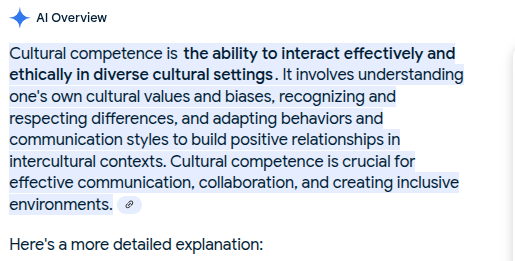
Key Aspects of Cultural Competence:
    • Self-awareness:
      Understanding your own cultural background, values, and biases, and how they might influence your interactions with others.
    • Cultural knowledge:
      Acquiring knowledge about different cultures, including their beliefs, values, customs, and communication styles.
    • Cultural sensitivity:
      Recognizing and respecting cultural differences, and being aware of the potential for misunderstandings and misinterpretations.
    • Cultural skills:
      Developing the ability to adapt your communication and behavior to different cultural contexts, and to build rapport with people from diverse backgrounds.
    • Cultural safety:
      Creating environments where individuals from all cultures feel respected, valued, and safe.
Why is Cultural Competence Important?

    • Improved communication:
      Effective communication is essential for building strong relationships and achieving goals in any setting.
    • Better collaboration:
      Cultural competence enables people from different backgrounds to work together effectively, fostering innovation and creativity.
    • Inclusive environments:
      Culturally competent individuals create welcoming and inclusive spaces where everyone feels a sense of belonging.
    • Reduced disparities:
      In healthcare, cultural competence can help to address health inequalities and ensure that everyone has access to quality care.
    • Ethical interactions:
      Cultural competence involves interacting with others in a respectful and ethical manner, regardless of their cultural background.
How to Develop Cultural Competence:

    • Education and training:
      Participate in workshops, courses, and training programs that focus on cultural awareness, sensitivity, and intercultural communication.
    • Seek out diverse experiences:
      Engage with people from different cultural backgrounds through volunteering, travel, or by joining cultural events and organizations.
    • Reflect on your own biases:
      Regularly examine your own cultural assumptions and beliefs, and how they might be impacting your interactions with others.
    • Be open to learning:
      Approach interactions with an open mind and a willingness to learn from others.
    • Practice active listening:
      Pay close attention to what others are saying, and ask clarifying questions to ensure understanding.
    • Show empathy:
      Try to understand the world from another person's perspective.
    • Be patient and persistent:
      Developing cultural competence is an ongoing process that requires patience, practice, and a commitment to learning.